The ride did descend into a little chaos towards the end, as a prolonged argument broke out towards the back of the bus amongst a group of men. First thoughts were that a damming comment had been made about Sachin Tendulker’s front foot technique, but as the argument was sustained for 20 minutes, we wondered if something a little more controversial had happened (though a damning comment about the Little Master is pretty controversial in these parts). All was settled as the driver swung the bus into the car park of a cop shop and the police removed three men from the bus in a manner that bore no resemblance to Dabangg’s manly approach (see the last blog).

Once safely in Kerala, we met up with Geoff & Julie and made arrangements to hit the backwaters (a series of canals and lakes) in a locally built house-boat. Having perused a half dozen options we made a booking and boarded our seafaring habitation, ‘The Dream Boats’. A very relaxing 24 hours was spent plying the backwaters, with reading time interrupted by a couple of snakes in the canal, a visit to a fisherman’s stall and the incredible sight of hundreds of school children awaiting their boat ride home.

Julie at the helm.


It was on the backwaters that we also found time to read up about the climate in southern India at this time of year. The heavy and frequent down-pours seemed to sit well with the ‘monsoonal’ description given to October in southern India, and thus we realised that the week ahead would probably be a wet one. The rains on the backwaters did seem pretty substantial and a few days later we were not surprised to read that the rain in the 24 hours we spent on the backwaters was a record amount and had caused some relatively significant flooding and killed a dozen people.

With the backwaters ticked off, we ventured to the northwest to Munnar, opting for the local bus option again. The seven hour trip was an interesting one, though it was clear by the end that the safest way to get to Munnar was on the bus being expertly man-handled by the man sitting one row in front of Caroline & Julie. Munnar is a high country region near the Tamil Nadu border which is famed for its tea plantations. The last part of the bus ride to Munnar was superb and a taster for the scenery we’d immerse ourselves in the next day. The beautiful scenery was only interrupted by the heavy down-pours that would force us to pull down the shutters on our open air windows.
The first order of business was to find some accommodation and thus we went with a Lonely Planet recommended home-stay option just out of town. The picturesque setting and friendly welcome were promising, as was the Lonely Planet’s description of Mr Iype, the owner, as a ‘walking swiss-army knife of Munnar information’. Over the 48 hours we spent with Mr Iype we came to conclude that the description was probably accurate in 2009, but a more accurate description now would be ‘repetitive and slightly senile old git who’s good intentions can be reasonably annoying’. Still, he organised a good day out for us and was happy to bring us up to speed with Paul Henry’s latest gaf (heh heh, her last name was ‘Dikshit’).

The first order of business was to find some accommodation and thus we went with a Lonely Planet recommended home-stay option just out of town. The picturesque setting and friendly welcome were promising, as was the Lonely Planet’s description of Mr Iype, the owner, as a ‘walking swiss-army knife of Munnar information’. Over the 48 hours we spent with Mr Iype we came to conclude that the description was probably accurate in 2009, but a more accurate description now would be ‘repetitive and slightly senile old git who’s good intentions can be reasonably annoying’. Still, he organised a good day out for us and was happy to bring us up to speed with Paul Henry’s latest gaf (heh heh, her last name was ‘Dikshit’).

Joseph Iype - a Swiss-army knife in need of sharpening (photo courtesy Julie Maslin).

We spent a day with a private driver checking out the Munnar countryside and tea museum which was great. It was the first time any of us had seen tea plantations, let alone a tea plant, and the pattern they make on the hillside is a special sight. The tea museum was a little ho-hum, though the lack of health and safety regulations did mean we could get very close to the tea production line and the information video would have made any communist in charge of video propaganda proud. And of course, there was plenty of rain to accompany us on our day out and about.


The rapid fire tour of the south then turned its attention to Cochin, the city we’d flown into a few days earlier and bypassed. A cosy wee place on the coast famed for its seafood, one of our first interactions suggested not everyone was as relaxed as the setting would suggest. Having arrived at our preferred accommodation option in Fort Cochin we found it booked out. So while Caroline walked the streets for another option, Julie found a good alternative and asked the guy at the reception of the lodgings we’d arrived at if she could make a phone call. No worries he said, and handed over his cell phone.
Having made the 30 second call, Julie handed the phone back, only to receive a verbal invoice for the use of said phone. Julie’s suggestion that he should have made that clear when he gave her the phone drew a venomous tirade – “Nothing is free in India, blah blah bloody blah”. The dilation of his pupils suggested he’d left the reservation so Mat chipped in with some calming words to diffuse the situation – nothing more than a little misunderstanding and probably best just to ‘relax’. Well bugger me if that didn’t set him off again – “Don’t tell me to relax, I’m Indian, I can’t relax, this is not New Zealand, blah blah bloody blah”. Hence, ‘Relax-Man’ got his knick-name and we happily moved on once Caroline returned with news she’d secured us an apartment above someone’s house.
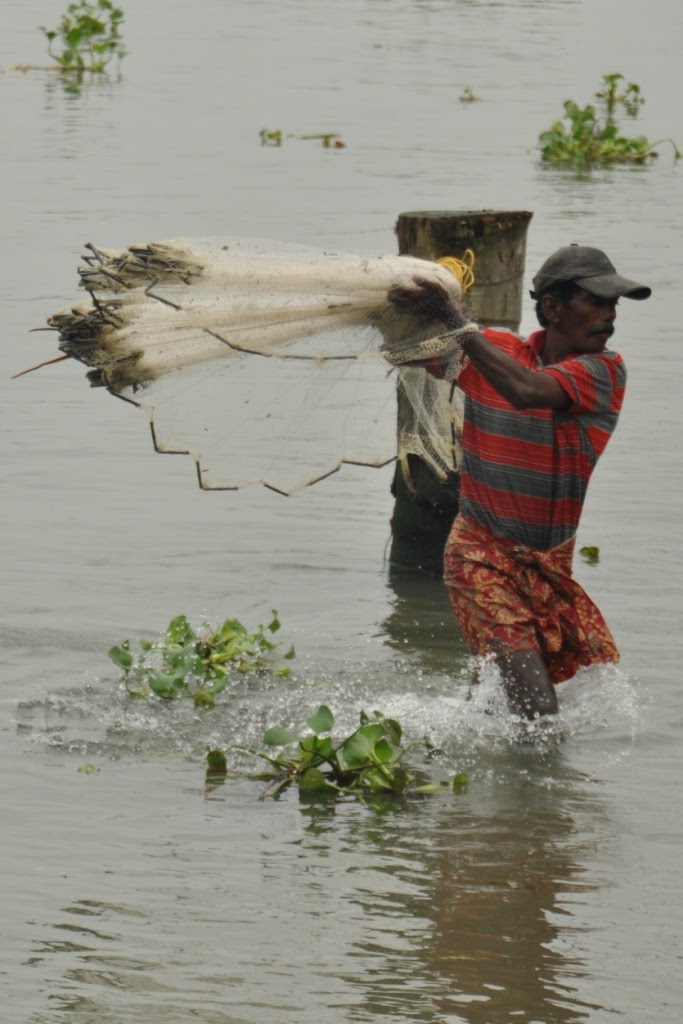
Our time in Cochin was pretty relaxed as we unwound ahead of Mumbai. We found a great cafe come art gallery that would not be out of place in Ponsonby where we left masala anything behind us for an hour and smoked through a number of paninis and coffees. The only sight we took the time to checkout was the fishing activity along the outlet of the Vembanad Lake. Huge Chinese fishing nets line the shoreline while in between these structures, locals hand cast nets for sardines. Due to the rains (which were still plaguing us in Cochin) there was too much weed in the water to see the Chinese nets in action.
Having made the 30 second call, Julie handed the phone back, only to receive a verbal invoice for the use of said phone. Julie’s suggestion that he should have made that clear when he gave her the phone drew a venomous tirade – “Nothing is free in India, blah blah bloody blah”. The dilation of his pupils suggested he’d left the reservation so Mat chipped in with some calming words to diffuse the situation – nothing more than a little misunderstanding and probably best just to ‘relax’. Well bugger me if that didn’t set him off again – “Don’t tell me to relax, I’m Indian, I can’t relax, this is not New Zealand, blah blah bloody blah”. Hence, ‘Relax-Man’ got his knick-name and we happily moved on once Caroline returned with news she’d secured us an apartment above someone’s house.
Our time in Cochin was pretty relaxed as we unwound ahead of Mumbai. We found a great cafe come art gallery that would not be out of place in Ponsonby where we left masala anything behind us for an hour and smoked through a number of paninis and coffees. The only sight we took the time to checkout was the fishing activity along the outlet of the Vembanad Lake. Huge Chinese fishing nets line the shoreline while in between these structures, locals hand cast nets for sardines. Due to the rains (which were still plaguing us in Cochin) there was too much weed in the water to see the Chinese nets in action.




Our final destination in India was the booming metropolis of Mumbai, an hour long flight to the north. The flight was a good one, but we all found the air hostess kits a bit of a giggle. The whole get-up was Fembot-esque with each hostess wearing a black bob cut wigs with little hats on tops. Julie & Caros got in a little trouble trying to get a snap of them during the safety presentation, but our readers demand a blog built around photo documentation.

In case of emergency, stand trance like.
Arriving in Mumbai, we realised we were back in real India – southern India now seemed like a wet oasis with more in common with the Lake District than India. Our ride from the airport was in one of the ubiquitous Mumbai taxis where the lack of space for our luggage was overcome with a 5 metre length of rope. The driving skills of the driver were a kin to those of a Delhi auto-rickshaw driver, so the ride through Mumbai was a little hair-raising in places.

With a couple of days ahead of us before we headed to Africa, the first order of business was banking admin and picking up final supplies. Thus, we made our way to the main HSBC branch in Mumbai, a place that soon became our second home. The first order of business was to locate new credit cards which were to have been delivered for us. An hour and a couple of phone calls later, we’d ascertained that the credit cards had been returned to sender and destroyed. Another fine example of the higher level of service HSBC offers to its ‘Premier’ clientele.
Meanwhile, across the floor Geoff had run into some issues cashing traveller’s cheques (apparently it is not enough to be a premier customer in an HSBC branch with HSBC issued travellers cheques, but you must also hold an Indian bank account) and was getting some local currency out of the ATM. The only problem was that Geoff only had 30,000 rupees on him but was sure he’d withdrawn 40,000. Having searched almost every possible hiding spot for the cash (Geoff was sure he’d remember if he’d put it there!), another hour was spent trying to determine the location of the mysterious 10,000 rupees. The advice from the bank staff was that he had withdrawn 40,000, but it would take 24 hours to determine if the machine had swallowed 10,000 of it.
Over the next 24 hours, we returned twice to HSBC, once for Mat to talk to someone in London about the credit card issue (a ‘sorry Mr Bartholomew’ being the conclusion to that discussion), the second time for Geoff to find out the missing 10,000 was in fact back in the cash machine and would be credited back to him. The only silver lining was that the HSBC branch was pretty swanky, made good tea and coffee, offered a generous bowl of chocolate éclairs sweets and had a good selection of magazines which we pilfered from for our onward reading pleasure. Following on from the photographic incident on the flight to Mumbai however, we received a similar telling off for taking a photo in the bank.


With a couple of days ahead of us before we headed to Africa, the first order of business was banking admin and picking up final supplies. Thus, we made our way to the main HSBC branch in Mumbai, a place that soon became our second home. The first order of business was to locate new credit cards which were to have been delivered for us. An hour and a couple of phone calls later, we’d ascertained that the credit cards had been returned to sender and destroyed. Another fine example of the higher level of service HSBC offers to its ‘Premier’ clientele.
Meanwhile, across the floor Geoff had run into some issues cashing traveller’s cheques (apparently it is not enough to be a premier customer in an HSBC branch with HSBC issued travellers cheques, but you must also hold an Indian bank account) and was getting some local currency out of the ATM. The only problem was that Geoff only had 30,000 rupees on him but was sure he’d withdrawn 40,000. Having searched almost every possible hiding spot for the cash (Geoff was sure he’d remember if he’d put it there!), another hour was spent trying to determine the location of the mysterious 10,000 rupees. The advice from the bank staff was that he had withdrawn 40,000, but it would take 24 hours to determine if the machine had swallowed 10,000 of it.
Over the next 24 hours, we returned twice to HSBC, once for Mat to talk to someone in London about the credit card issue (a ‘sorry Mr Bartholomew’ being the conclusion to that discussion), the second time for Geoff to find out the missing 10,000 was in fact back in the cash machine and would be credited back to him. The only silver lining was that the HSBC branch was pretty swanky, made good tea and coffee, offered a generous bowl of chocolate éclairs sweets and had a good selection of magazines which we pilfered from for our onward reading pleasure. Following on from the photographic incident on the flight to Mumbai however, we received a similar telling off for taking a photo in the bank.

At home at HSBC India.
In amongst making friends with the staff at HSBC, we hit a mall and sorted out other pre-Africa matters, including the need for new passport photos. Being India, the one place that offered passport photos had battery issues with their camera. No worries mate, as we pulled out our own camera, took our own photos and then helped them print them out. After the mind-numbing fun of the first day in Mumbai, we found a dive bar in the back streets of down-town Mumbai and invested in some foaming brown ales in a dark, smoke-filled bar where the locals we’re quite happy to see us getting amongst it with them.


The Passport Guidelines don't say 'don't flare your nostrils'.
Our final day in India saw us blast round the key sights of which a few stood out. First up was Mahalaxmi Dhobi ghat which is probably the world’s largest human powered washing machine. Concrete tubs line the alley ways, giving way to line after line of drying washing which vanish into the distance. We looked but could not spy the washing we’d given to our hotel, but the odds were was that it was somewhere in the mix.


Train travel is something to see in Mumbai, given that the main train station is the busiest in Asia and an architectural gem. So we spent quite a bit of time people watching at a couple of stations which, when you consider that there are on average 7,000 people in an 1,800 person capacity train at rush hour (Lonely Planet 2009), was pretty interesting. People jostle for position on the platform as the train arrives and, at the earliest possible moment (and while the train is still moving), make a jump and push for the open carriage door. Presented the opportunity to use a local train (though not at rush-hour), we climbed on board in good traveller fashion.


Our final evening in India was spent on Chowpatty Beach, taking in the sunset and a few of the local treats before a final vegetarian thali.

Changing light bulbs at the cricket stadium.

Geoff after showing the lads behind him the photos of the sunset he'd taken.


So after three weeks in India, we’re now on our way to Africa where 2 months and 8 other countries await us. Our time in India has been both amazing and incredibly frustrating at times, and we suspect a little water under the bridge will provide us with a bit of perspective when asked our thoughts on the place. We did have one last moment though that summed up the place at Mumbai airport as we were making our way through security before our flight to Mumbai.
As Mat walked towards a security, a little old Indian lady muttered something. Mat asked if she was talking to him, which she most certainly was, infuriated with an apparent breach of queuing protocol on Mat’s part. It being 1am, Mat couldn’t hold back and responded “I lived in London, the land of queuing, for three years, and in the three weeks I’ve been in India, I’ve not seen anything that resembles a queue. The first time I thought I was in a queue, 100 pushy Indians pushed in front of me. I’m not in the mood for this, so it would be best if you didn’t follow me to this security check point where there is clearly, NO QUEUE!”.
Finally, a big congratulations to Gareth and Katho whose wolf pack has grown by one with the arrival of Amelia. Great news and look forward to meeting her in January.
As Mat walked towards a security, a little old Indian lady muttered something. Mat asked if she was talking to him, which she most certainly was, infuriated with an apparent breach of queuing protocol on Mat’s part. It being 1am, Mat couldn’t hold back and responded “I lived in London, the land of queuing, for three years, and in the three weeks I’ve been in India, I’ve not seen anything that resembles a queue. The first time I thought I was in a queue, 100 pushy Indians pushed in front of me. I’m not in the mood for this, so it would be best if you didn’t follow me to this security check point where there is clearly, NO QUEUE!”.
Finally, a big congratulations to Gareth and Katho whose wolf pack has grown by one with the arrival of Amelia. Great news and look forward to meeting her in January.